
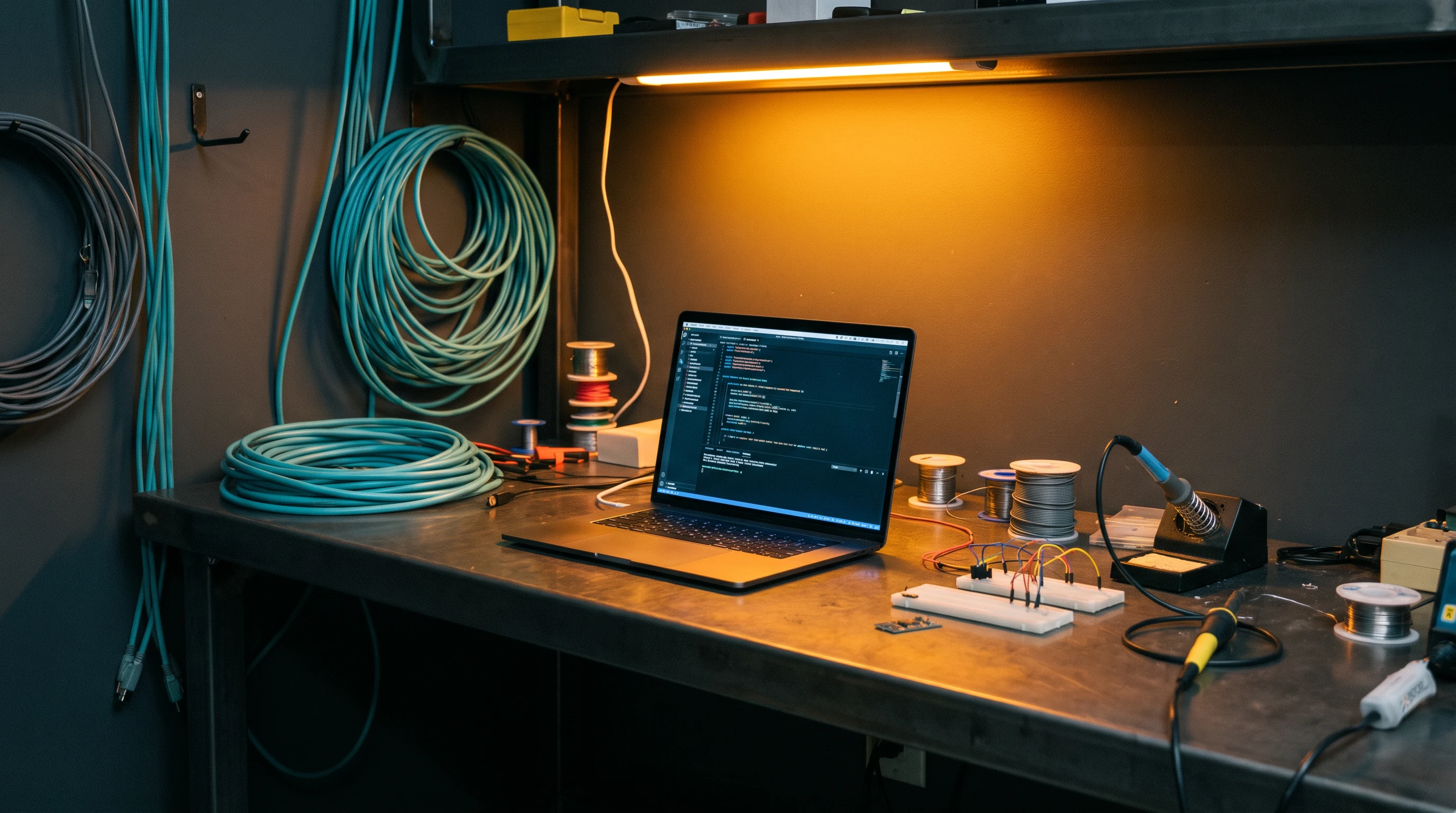
WO-01 / Systems build
Systems Assembly
Trace a small application from a readable brief into modules, interfaces, and a reviewable handoff. This order is for learners who want structure before speed.
- Dependency mapping
- Interface contracts
- Build notes

IT learning, built as work
Gavelomix turns IT study into a sequence of practical work orders: inspect the material, fabricate a focused piece, measure it, and prepare a handoff someone else can follow.
02 / Select a work order
Choose a build family. Each work order organizes learning around a specific kind of technical material and the decisions required to make it useful.

Trace a small application from a readable brief into modules, interfaces, and a reviewable handoff. This order is for learners who want structure before speed.

03 / Before the build
There is no performance theatre here. Start by naming the tools, concepts, and questions you have on the bench. These prerequisites are starting conditions, not a gate.
Identify the requested behavior and the constraints around it.
Prepare an editor, browser, and a place to write decisions.
Separate known inputs from assumptions that need checking.
Record changes so a reviewer can reconstruct the build.
04 / Fabrication bays
A bay contains short, deliberate units: a material to examine, an operation to attempt, and an inspection cue that keeps the work legible.

Practice drawing boundaries, dependencies, and a plain-language purpose statement.

Assemble a readable component with states that do not disappear on a narrow screen.

Turn a repeated task into a transparent sequence of decisions.

05 / Quality gauge
Move through an inspection pass to see how Gavelomix frames quality. The gauge does not certify a learner. It makes the next useful question visible.
06 / Machining table
Bring a small piece of work to the table and identify the intent, the seam, and the thing that a future maintainer would need to know.
// describe the decision, not just the action
function formatWorkOrder(brief) {
  const title = brief.title?.trim();
  if (!title) return 'Untitled work order';
  return title;
}07 / Shift supervisor clinic
A clinic is a structured conversation for work that will not move: an unclear brief, a stubborn interaction, a tangled process, or a handoff that feels incomplete.
08 / Build dispatch
The queue is a practical way to move through course work. Select work that matches the material in front of you; do not treat the list as a race.
Map inputs, outputs, and ownership.
Build one responsive interface piece.
Write the next check and the reason for it.


09 / Crate & handoff
A course closes with a handoff note: what was made, what choices matter, what remains unresolved, and what a future builder should inspect first. That record is part of the work, not an afterthought.
10 / Floor notes
Short answers are useful in a machine manual. These answers take the time needed to explain how the foundry approach is meant to be used.
11 / Job card
Tell us what you are trying to build, study, or untangle. This browser-only job card is a demonstration form; it does not transmit your details.
Read how this site handles privacy